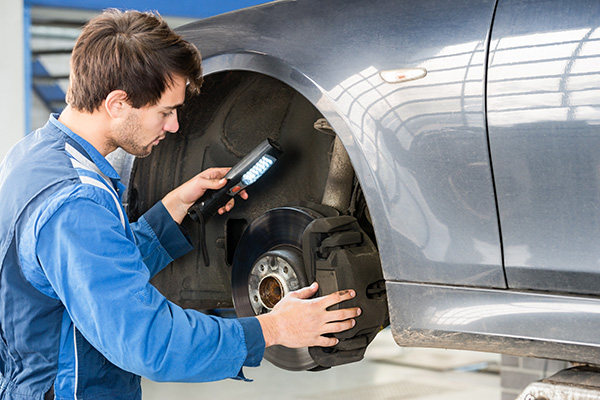
When brakes feel off, it is usually not one dramatic symptom. It is a handful of small changes that make the car feel less predictable than it used to. Most drivers notice it during the same moments every day, like rolling up to a stoplight, backing out of a driveway, or slowing down on an exit ramp. Those small clues are worth taking seriously because braking problems rarely improve on their own.
Brakes are also a system, not just pads and rotors. Pedal feel, steering feel, noise, and even smell can point to different causes. If you can describe what you feel and when it happens, it becomes much easier to figure out what needs to be repaired.
Pedal Feel Changes That Matter
A firm pedal that suddenly feels soft often means the hydraulic system is not building pressure the way it should. Air in the lines, worn brake hoses, or a problem in the master cylinder can all cause a soft pedal, and none of them are worth ignoring. If the pedal gradually sinks while you hold it at a stop, treat that as a major red flag.
A high, hard pedal can be a clue too. Sometimes pads are glazed from heat, or the booster is not assisting as it should, so stopping feels stiff and requires more effort. If the pedal effort changed without a recent brake job, that change is meaningful.
Stopping Distance And Confidence Drops
If you feel like you have to press the pedal farther than normal to get the same stop, that is a clue, even if the car still stops. Worn pads, contaminated pads, or rotors that are no longer grabbing evenly can all stretch stopping distance. You might not notice it on dry roads at low speeds, but it becomes obvious in the rain or when traffic suddenly slows.
Brake fade is another confidence killer. If braking feels normal at first and then feels weaker after a few stops, the brakes may be overheating or a caliper may be dragging. Heat changes friction fast, and once the system is hot, weak parts show themselves.
Pulling, Wandering, And Steering Feedback
If the car pulls left or right when you brake, something is not applying evenly. A sticking caliper is a common cause, but uneven pad wear, a brake hose that is collapsing internally, or a rotor issue can create the same sensation. The pull may be subtle at first, then get stronger as the brakes heat up.
Pay attention to the steering wheel too. If the wheel tugs in your hands during braking, that is more than an annoyance, it is feedback that one side is doing different work than the other. This is also where tire or alignment problems can overlap, so it helps to note whether the pull happens only while braking or all the time.
Noises And Smells People Brush Off
Squealing is the sound most people recognize, but not all worn brakes squeal. Some pads have wear indicators that chirp, and some compounds squeal lightly even when they have plenty of material left. Grinding is different. Grinding often means the pad material is gone and metal is contacting the rotor, which can turn a simple pad job into a rotor replacement quickly.
Smell is another clue drivers miss. A sharp, hot odor after a short drive can mean a caliper is dragging or a parking brake is not releasing fully. If one wheel smells hotter than the others, that detail matters when you bring it in.
Vibration, Pulsing, And ABS Confusion
If the steering wheel shakes only when braking, front brake vibration is a strong suspect. The usual cause is uneven rotor wear, which creates a repeating pulse you feel through the pedal and wheel. If the vibration is present even when you are not braking, it may be a tire or suspension issue that braking simply makes more noticeable.
ABS can confuse the picture because ABS pulsing feels similar to vibration. ABS is normal during a hard stop on slick pavement, but it should not activate during gentle braking on dry roads. If the pedal chatters during light stops, a wheel speed sensor or tone ring issue may be triggering ABS when it should not.
Quick Checks Before You Drive It Another Week
A few simple checks can tell you whether this is urgent. Look at brake fluid level and condition, and do not assume a low level is normal, because it can point to pad wear or a leak that needs attention. Also check whether any warning lights are on, especially a red brake warning light, because that changes the situation immediately.
If you want to keep problems small, tie braking checks into regular maintenance and do not wait until the car is making noise every stop. A basic inspection during a tire rotation or oil service often catches uneven pad wear, sticking hardware, or early hose cracking before it becomes a bigger repair. If the pedal feels unsafe, the car pulls hard, or the brakes fade after a few stops, book service now instead of stretching it out.
Get Brake Service In McFarland, WI, With Tom's Auto Center
If your brakes feel off, the next step is to book brake service so worn parts, uneven braking, or hydraulic issues get repaired before they turn into a longer stopping distance or a more expensive job.
Schedule service with Tom's Auto Center in McFarland, WI, to get confident braking back and keep your daily driving predictable again.